Your car feels like an oven
THE SOLUTIONSolar control window film can reduce the heat coming through your glass, helping make your drive more comfortable. Compare heat rejection performance, not just how dark the tint looks.
Hot cabin? Paint chips? Windshield worries?
Start with the problem. Find the right protection.
Automotive window film is a thin layer applied to the inside of vehicle glass to improve comfort and change its appearance. Paint protection film, or PPF, goes on painted surfaces. Windshield protection film goes on the outside of the windshield to help protect the glass. Gabe’s Auto Detailing helps you match each option to your vehicle, driving habits, and budget.
Choose window tint around what bothers you most on the road. Shade and performance are different decisions.
Solar control window film can reduce the heat coming through your glass, helping make your drive more comfortable. Compare heat rejection performance, not just how dark the tint looks.
Window tint can soften bright sunlight and reduce glare. We help you balance comfort, visibility, and the right shade for each window.
Tint can make it harder to see into your vehicle during the day and give the glass a consistent finish. Privacy depends on the shade and lighting; tint does not make belongings invisible.
Films with UV blocking properties help reduce UV exposure through the treated glass. Ask about the specific film’s performance. Tint does not stop every cause of interior fading.
The best shade is one you can see comfortably through and that meets the rules where you drive. We review glass location, factory tint, and applicable requirements before recommending an option.
Explore window tintingVLT means Visible Light Transmission: the percentage of visible light that gets through. Lower number, darker tint. Higher number, lighter tint.
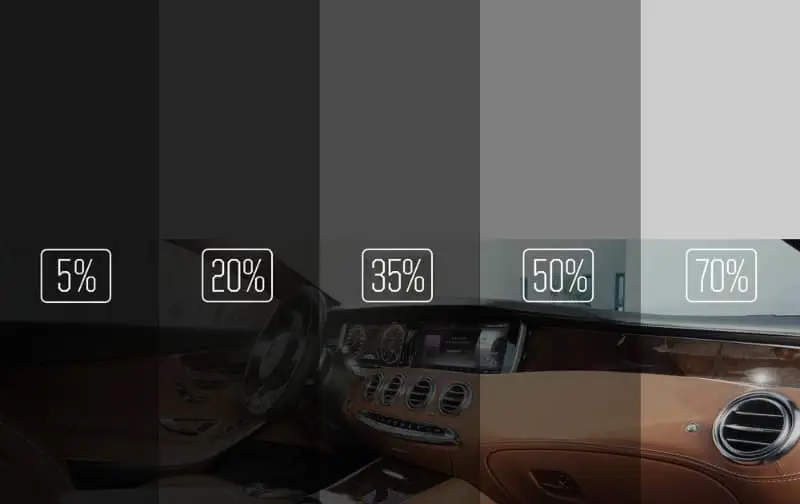
Visual comparison only. Actual appearance varies with lighting, your screen, factory glass, and the film selected.
Compare the specific film’s solar performance. A lighter ceramic film can offer strong heat rejection.
Film and existing glass work together. For example, 70% glass with 50% film gives approximately 35% combined VLT.
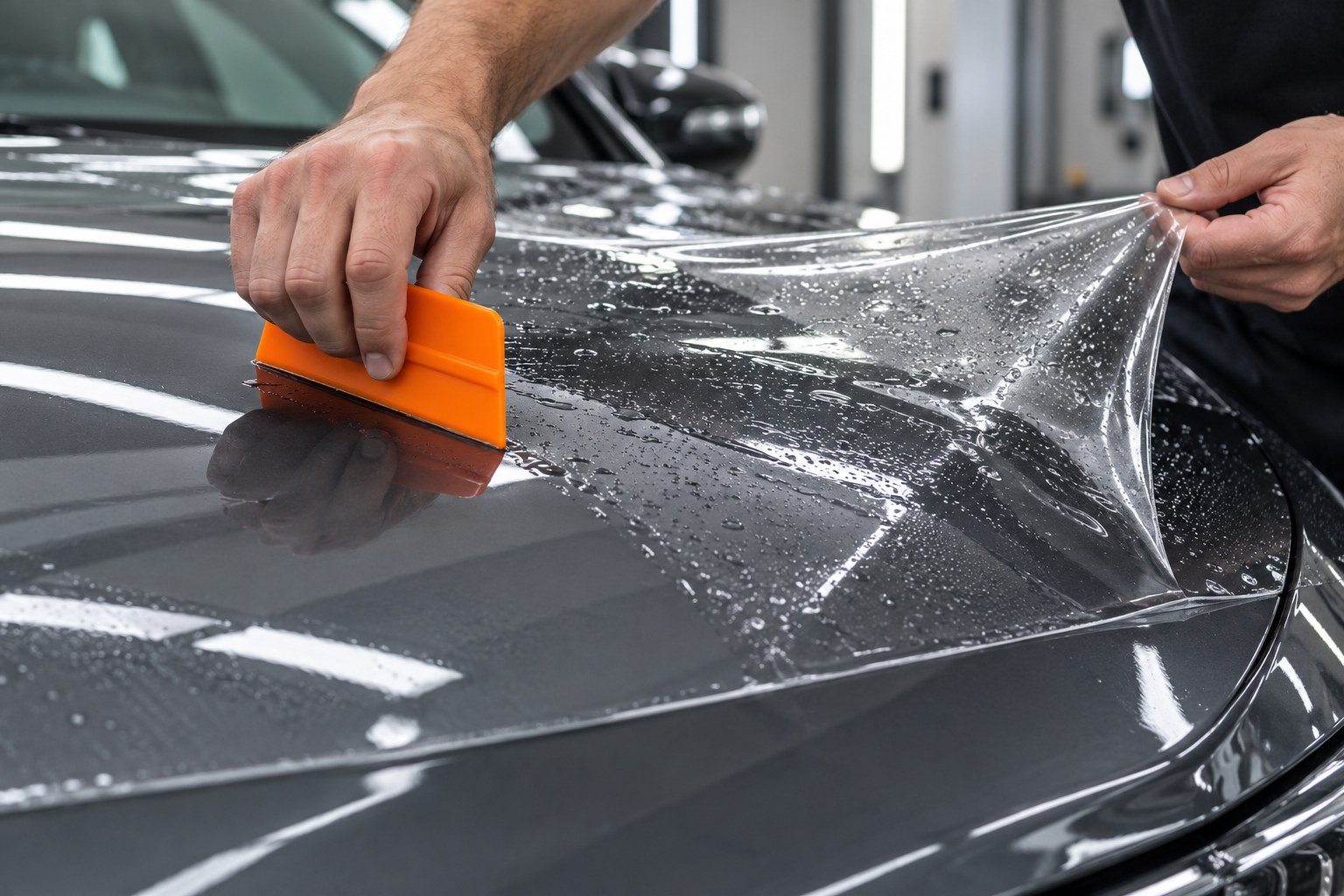
The problem: Road debris, bug residue, and everyday wear can leave marks on a finish you want to preserve.
The solution: PPF adds a protective layer over painted surfaces to help reduce stone chips and light surface damage. Start with exposed areas such as the front bumper, hood, and mirrors, or discuss more extensive coverage.
Some films have self healing topcoats that help light surface marks fade under the conditions specified by the manufacturer. PPF does not prevent every scratch, impact, or dent.
PPF and ceramic coating do different jobs. Coating helps with gloss and easier cleaning; PPF provides a physical protective layer. Ask whether using both fits your goals.
Explore PPF coverageThe problem: Small stones and road debris can chip windshield glass, interrupting your day and leading to repairs or replacement.
The solution: Clear exterior windshield protection film adds a sacrificial layer designed to help reduce damage from small road debris. It is different from interior window tint and does not make the windshield unbreakable.
Tell us about highway miles, commuting, and your vehicle. We review film fit, optical clarity, care needs, and the vehicle’s cameras and sensors before recommending an installation.
Explore windshield protectionGabe’s Auto Detailing offers ClearPlex Tesla Ready Fit Kits. Share your model and year so we can confirm fit, availability, and installation details.
Explore Tesla Ready Fit KitsFollow the film’s cleaning and wiper care instructions. Exterior film wears with use and may need replacement. Existing chips or cracks should be assessed before installation.
| Your concern | Start here | Where it goes |
|---|---|---|
| Cabin heat, sun glare, privacy, or UV exposure | Automotive window film | Inside vehicle glass |
| Paint chips and light surface wear | Paint protection film | Painted exterior surfaces |
| Windshield chips from small road debris | Windshield protection film | Outside the windshield |
You can combine films because each protects a different part of your vehicle. We can help you prioritize the upgrade that matters most to you.
No. Film technology matters as well as shade. Compare the exact film’s solar performance and choose darkness separately around visibility and applicable requirements.
Film is protection, not a repair. Existing paint damage, glass chips, and cracks need an assessment first.
Care depends on the product and where it is installed. We explain curing, cleaning, and maintenance for your specific installation before you leave.
Your vehicle, film selection, coverage, and any existing film removal affect the quote. Share your year, make, model, and main concern so we can recommend options.
Get guidance from Gabe’s Auto Detailing on the right film for your vehicle and your drive.
Discuss your film optionsCall or text Gabe’s Auto Detailing to discuss your service, get a quote, and schedule your visit.
Call or text to book267-252-9593